
A "Simple" Refit with Drop-In Lithium Batteries
Part 1 : Why, and What do we need to think about to prepare?

Lithium batteries offer great promise for cruising boats. We can have a physically smaller/lighter battery bank, with a larger capacity, that charges faster. We can pack so much battery capacity in our boats that running air conditioners and electric induction cooktops from our battery bank, via large inverters, becomes a reality. A large system like this is viable, but I am interested in discussing a different approach. I think a smaller system with operating parameters similar to lead acid but getting the benefits of lithium is interesting for many.
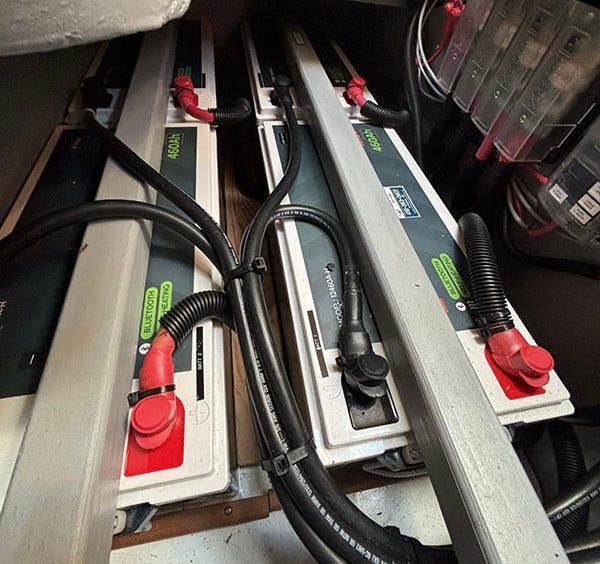
Let’s start with our goals, what we want from this battery system, and the constraints.
Goals
More Storage Capacity – we want to store more usable energy in our battery banks, ideally enough to get through at least a full day on the water. It’s common to have a 400 amp-hour lead-acid battery bank today, but you can’t use all that capacity. Let’s target capacity of at least 300 amp-hours.
Faster Charging – we want the bank to charge faster and to be able to use all the charging capacity available to use via the engine and any alternative sources. Ideally, we’d like to harness the power of the sun to fully charge during the day and run things all night long.
Save space and weight – ideally, we’d like to save space and weight, but this is a secondary goal
Constraints
Minimal System Disruption – We don’t want to rip and replace the charging infrastructure of the boat. We are willing to make some changes, but for example, we don’t want to replace our alternator or add a second one.
Minimize Cost – Along with not disrupting a lot of what we have, we’d ideally like to avoid spending a lot of money – hopefully not much more than we would replacing lead acid batteries.