
The Atlantic's Best Sailor?
"He must be cognizant of everything, especially of making sail"

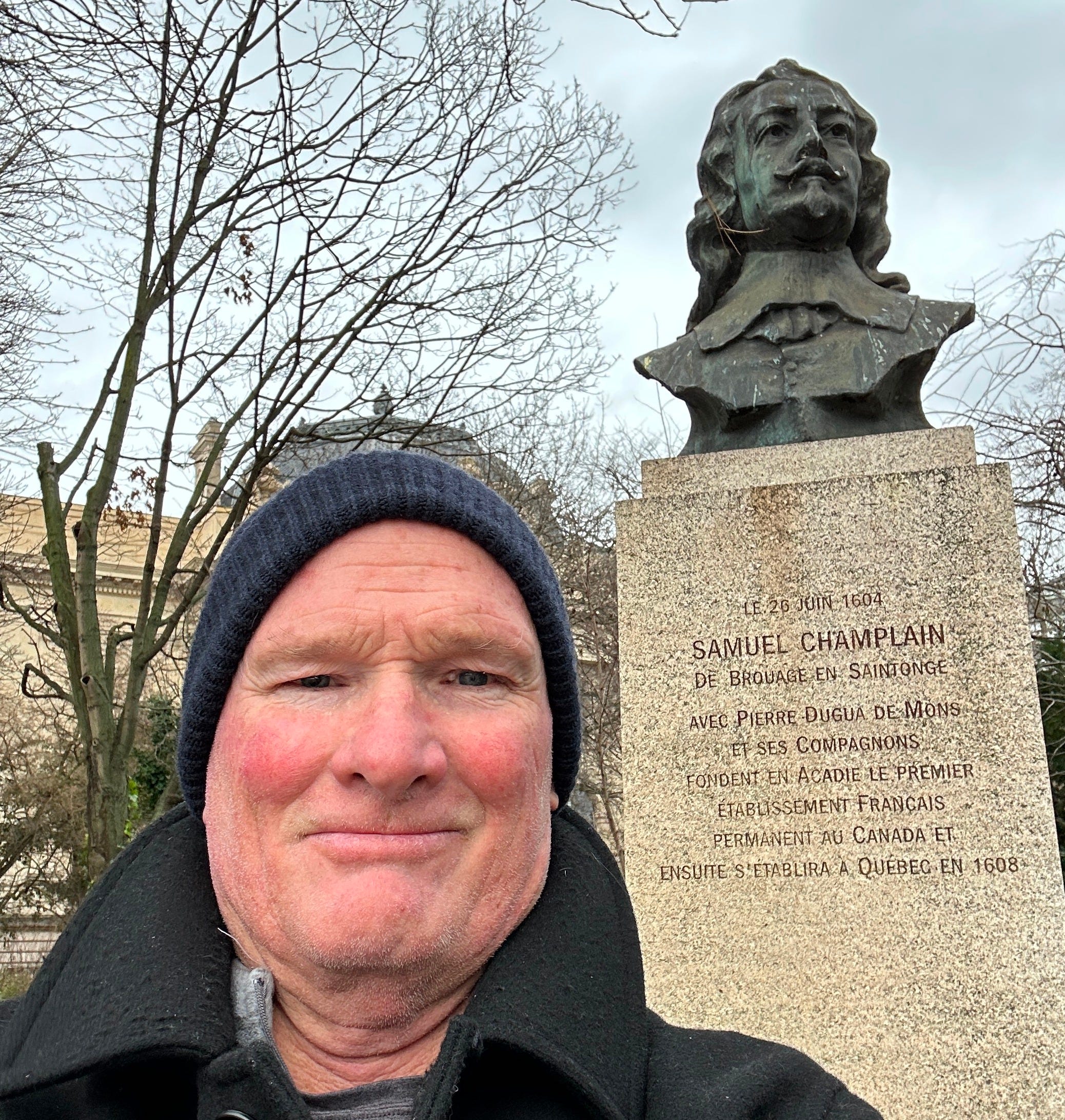
I ran into an old friend the other day in Paris. I was hurrying past the Grand Palais on my way to the Metro when I came across a bronze bust in a small park. The swoopy mustache gave him away, it was Samuel de Champlain; explorer, mariner and unofficial Father of New France. Other than an artful engraving, a self portrait of himself in battle, there are no known images of what he actually looked like. He’s usually depicted with a fanciful mustache turned up at the ends and long flowing hair, more like a troubadour in bronze than a bold discoverer.
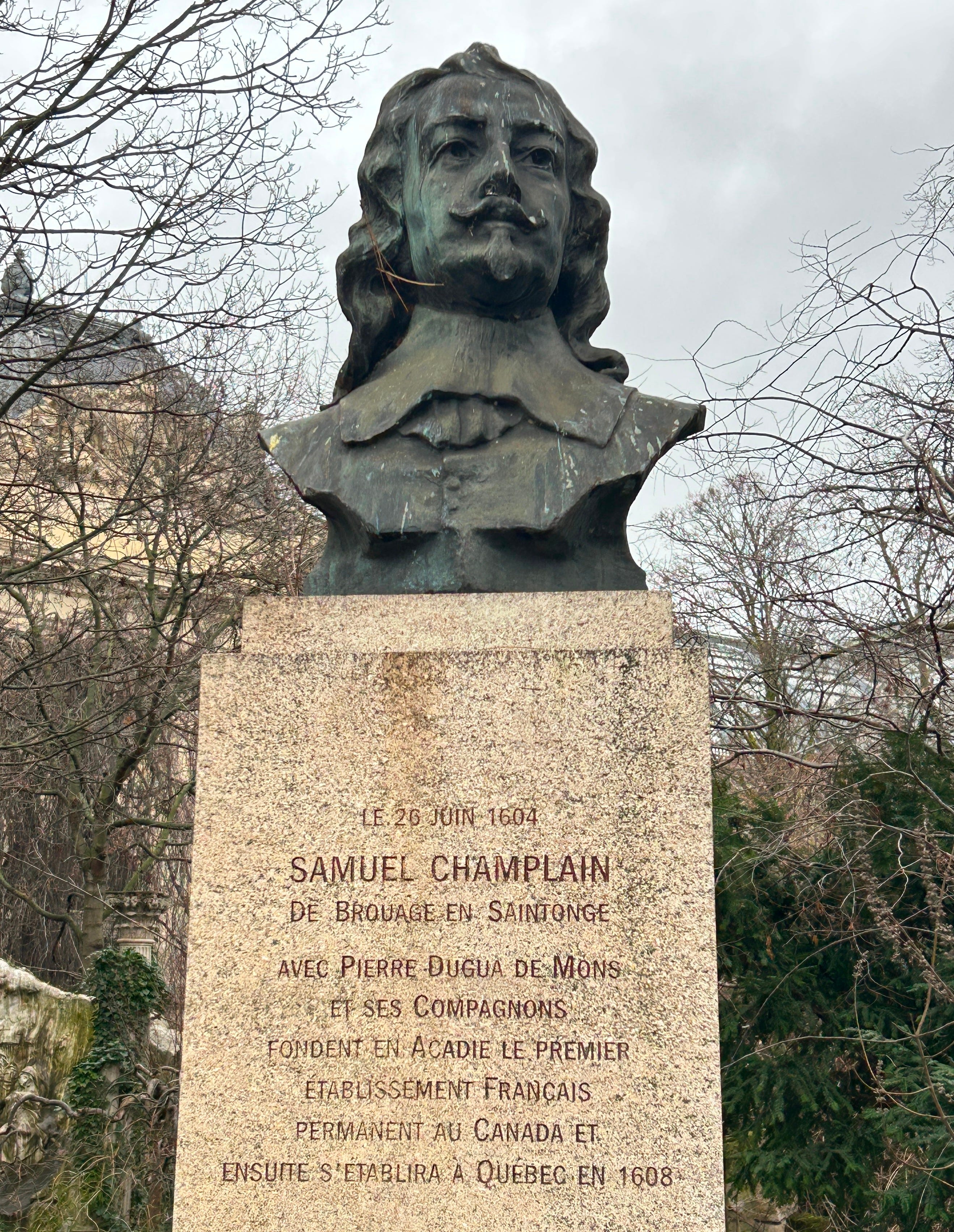
The inscription etched into the stone pedestal is prosaic and reflects Champlain’s diminished historical standing. It notes that along with Pierre Duga De Monts and companions, Champlain founded the first permanent French colony in Acadia in 1606 and then later founded Quebec in 1610. That’s it, no respect for his navigational accomplishments, not even in France, a country that reveres sailors.
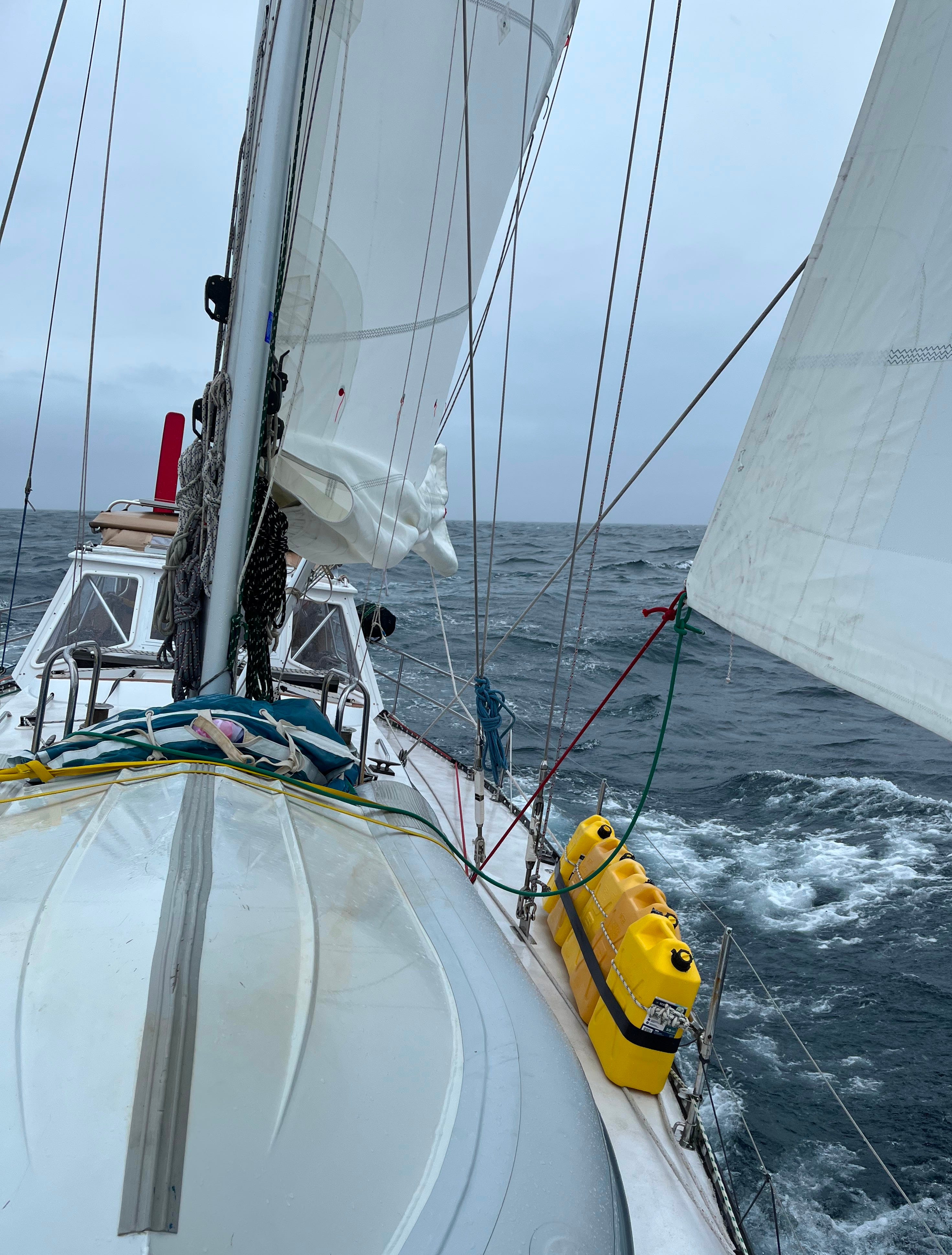
As some of you know, I am writing a book about an Atlantic voyage that took us north, nosing above the Arctic Circle, and south to Cape Horn and on to the South Shetland Islands of Antarctica. Quetzal, my much loved and almost 40 year old Kaufman 47 cutter crisscrossed the Atlantic in both hemispheres. I have been sailing for more than 45 years and have logged plenty of miles in all the world’s oceans, indeed, Quetzal is spending the austral summer in New Zealand as I write. But the Atlantic is where I feel at home, it’s my ocean, my place of worship. It’s where I’ve gone to work most days, escaping the shackles of land life. The book is as much about that mighty ocean as it is about our voyage. The Atlantic is a storyteller’s dream sea, and when it comes to Atlantic sailors, one person stands above all others. I’ve read so much about him I think of him as a friend, or at least a brother sailor.
It’s not Columbus, or John Cabot, or Ponce de Leon and his silly fountain. It’s not Lief Ericsson and his questionable vines or Martin Frobisher, one of my favorites, and his gold that turned to dust. It’s not the Pilgrims aboard their leaky Mayflower. It’s not more modern yachtsmen and women like Eric Taberly, Frances Chichester, Clare Francis, Philippe Poupon, Loïck Peyron or Mary Falk. I think you know where this is heading, yep, it’s none other than Samuel de Champlain. From 1599 through1633 he made 27 Atlantic crossings and never lost a ship under his command. The only ship he did lose was when he seized command of a leaking bark from a panic stricken skipper. Champlain hastily raised the main, clawed off a deadly lee shore and managed to drive the vessel ashore safely, saving the entire crew who would have surely been lost otherwise. And these were not the tropical and mid latitude passages of Columbus and the Conquistadors that followed in his wake. Champlain plied the stormy, foggy, ice laden seas of the North Atlantic. Crossing these treacherous, essentially uncharted waters was his near annual commute.
He is thought to have been born in the once thriving seaport of Brouage near La Rochelle sometime between 1570-80, nobody knows for sure and his early life is a bit of a mystery. He was likely born a protestant and converted to catholicism, maybe out of belief and maybe out of necessity, he was definitely ambitious. A persistent rumor is that he was the illegitimate son of King Henri IV, and it might explain his unusual access to the much loved and much hated monarch. As an adolescent he sailed the bay of Biscay, fishing along the coast of Spain and as far north as England with his father, a captain and ship owner. By his own account he learned to navigate, cope with storms and like most sailors, he was always sketching pictures of sailing ships and dreaming of distant passages. He spoke French with the strong Saintongeais accent of the region, and smatterings of Basque, Spanish and English. After his apprenticeship at sea, he joined the army and remained a soldier his entire life.
Champlain, whether Henri’s son or not, had a knack for making friends in high places. As a courtier, he would carefully navigate the reigns of two Kings, a Queen Regent and a devious Cardinal throughout his life, always promoting his enterprise in New France. As a young man he was able to find a berth aboard a Spanish treasure galleon sailing from Spain to the New World, an almost unheard of feat for a foreigner as Spain fiercely guarded her colonial possessions. He had an insatiable curiosity about new lands and people and while in the Americas he sailed to Cartagena, Panama and Vera Cruz. He even traveled overland to fabled Mexico City.
He returned to France committed to exploring the great, mostly untrampled continent on the far side of the Atlantic. Using his connection with the King and his own funds, he joined an expedition to what was then called Acadia, a large swath of land surrounding the Gulf of St. Lawrence. The tired old ship with an encouraging name, La Bonne Renommée (Good Reputation) was captained by a Saint Malo sea dog, François Gravé Du Pont, who would become Champlain’s ocean sailing mentor and lifelong friend.
They survived a rough crossing and landed at Tadoussac at the mouth of the St. Lawrence River, a site first visited by Jacque Cartier 60 years earlier and where Grave Du Pont had established a fur trading post. Champlain was entranced with the clear waters teeming with fish, seemingly endless forests and the handsome native peoples. Promoting a vision of peace and humanity in this new land, what he would call New France, would become his life’s calling. It was, ultimately, a failed vision as New France was plunged into war, exploitation and ruthless land grabs as European countries fought each other and the native people, vying for dominance in a bountiful land.
Champlain is best known for exploring the Great Lakes region and North American coastline, producing beautiful and accurate maps and charts. He also established working alliances between the French colonists and native peoples, honoring their land rights and traditions. But he was not a saint, far from it, and not above using force while assisting his allies in their disputes with other tribes. Still, compared to his fellow explorers he was a virtual Mother Teresa. Almost 400 years after his last sail, his reputation ebbs and flows as historians try to balance a narrative of daring discoveries with the relentless full press of colonialism. One thing that is not in question is Champlain’s seamanship. He was a master mariner.
Champlain was a prolific writer and while he wrote thousands of words about what he did and where he went, he wrote very little about himself. Fortunately, he wrote a lot about handling ships, the crew and navigation. In describing the qualities of a good captain, he wrote:
“He had better not be a delicate eater or drinker, otherwise he will be frequently upset by changes of climate and food. He must continually be on his guard against scurvy. He should be robust and alert and have good sea legs and be indefatigable so that whatever accident may befall he can keep the deck and in a strong voice order everyone to their duty. He must not be above lending a hand to the work himself, to make the seamen more prompt in their attention.”
He ran a tight ship but was anything but a tyrant. He was no Bligh as this statement notes:
“A good captain should punish ill-doers severely and reward good men, gratifying them from time to time to with a pat on the back, praising them but not overdoing it so as to give no occasion for envy - that gangrene that corrupts the body and if not promptly quenched leads to faction and conspiracy among the crew.”
He apparently ran a pretty strict Captain’s hour, stating:
“He should never let himself be overcome with wine for if an officer or seaman becomes a drunkard it is dangerous to entrust him with responsibility, he might be sleeping like a pig when an accident occurs and be the cause of the loss of the vessel.”
Champlain was paying attention when he was at sea.
“He should turn night into day, watch the greater part of the night and always sleep clothed so as to be ready to come on deck promptly if anything happens. The captain should keep a private compass below and consult it frequently to make sure the ship is on course.”
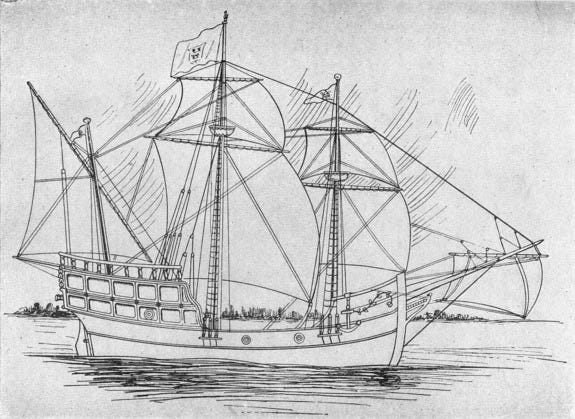
Ocean going ships were evolving during Champlain’s years at sea. Writer, David Fisher, notes that most of Champlain’s crossings were in vessels between 100-300 tons, mid-sized ships typically around 100’ in length. The French called them, navires de moyen calibre, and they were essentially sleeker and better sailing galleons. They were usually three masters, the foremast was raked forward, the mainmast aft, and the mizzen was fitted with a fore and aft lateen sail for better windward performance and ease the load on the helm. A forward sprit sail, though square rigged, could be sheeted tight, again to help con the ship to weather. Renowned marine historian Samuel Eliot Morrison claimed that Champlain writes of ocean passage making from the perspective of someone who clearly understands the sea, a sailor carefully monitoring the motion and pitch of the ship. Champlain noted that he often hove-to by dropping top sails, and backing the courses, a sailing technique that never goes out of fashion and a topic I am writing about very soon.
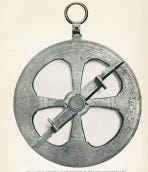
Champlain’s abilities as a navigator and cartographer go hand in hand, and he had few rivals in his day. He writes about the importance of dead reckoning and how when the ship is beating to weather, it is vital to make progress, not just sail north and south, something all sailors understand. He was one of the first navigators to use the modern English log, a length of calibrated line with tied knots, to measure speed. He was a master with the lead, and notes how coming onto the Grand Banks south of Newfoundland when approaching North America, sounding the bottom was vital in fog. He was also skilled in using the astrolabe, the predecessor to the sextant, for measuring the sun’s altitude at local apparent noon, and he carried ephemeris with declination tables to measure latitude. He also used a back staff, which he called a, crossbow, to observe Polaris, the north star, in the evening and a useful technique for finding latitude and direction. Although, like many mariners of his day, his latitude readings at sea were not all that accurate.
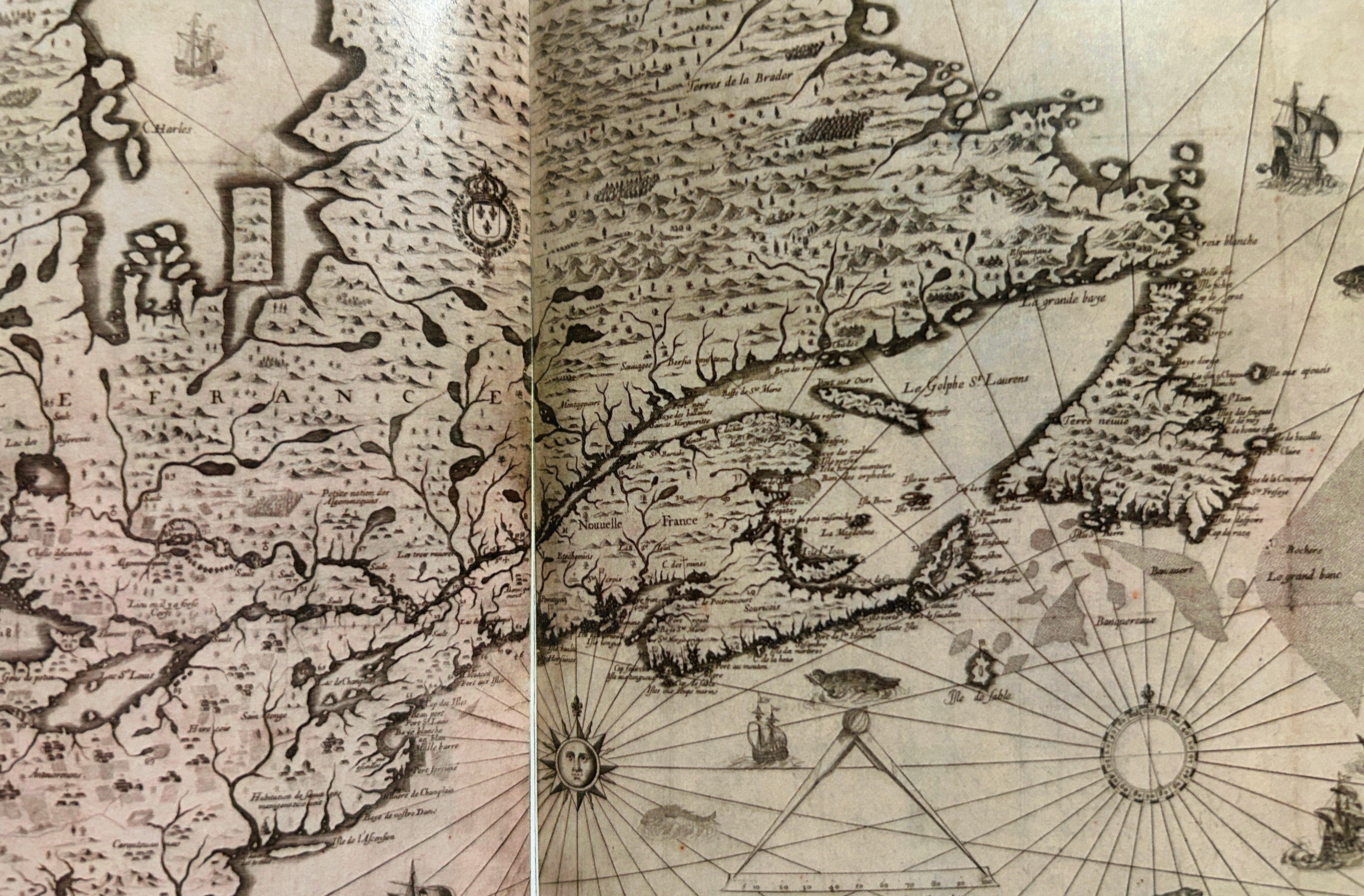
What was accurate, and also beautiful, were the hundred of charts and maps he created. He wrote, “there is nothing so useful for navigation as the nautical chart,” and even in this age of electronic navigation, I still agree with him. He should be considered in the same class as Captain Cook when it comes to early nautical cartography. His charts are all the more impressive considering how limited his instruments were. His last chart of the North American coast, from Delaware Bay to Southern Greenland, was published in 1632 and could be used for navigation today.
Sometimes I feel the a character in the song, you know the one, but in this case, 400 years too late. It would have been nice to sail with Samuel de Champlain, I am sure he would be a good shipmate with a lot of stories to share. Alas
.
John Kretschmer has been sailing professionally for 40 years, logging 400,000+ miles. He is the author of 7 books, including the international bestseller Sailing a Serious Ocean. John Kretschmer Sailing offers training passages, workshops, webinars and Captain’s Hour, a monthly meeting about all aspects of offshore sailing. For more information, email John at john@johnkretschmersailing.com
Well John, as the old saying goes , "la plus ça change, plus c'est la même chose". It is so gratifying to hear a story like this and know that when we heave-to, claw off, and keep the North Star a few points over the spreaders, we are standing on the shoulders of giants and following in the long, unbroken wake of time. In the future, while hauling the courses or battling the onset of scurvy, I shall think of Champlain.... great post!
Thank you for sharing this fabulous post John. I love the quotes from Champlain's journal about the characteristics of a Captain. We follow many of those same rules here on SV Duende, as I'm sure you do on Quetzal.
Those ancient mariners were the real deal, and we can still learn much from their experience.
Maybe we will cross paths in the Southwest Pacific this year. We will be in Vanuatu around the same time as you, and I'll keep an eye out for you.
Sail on! 💙🌎